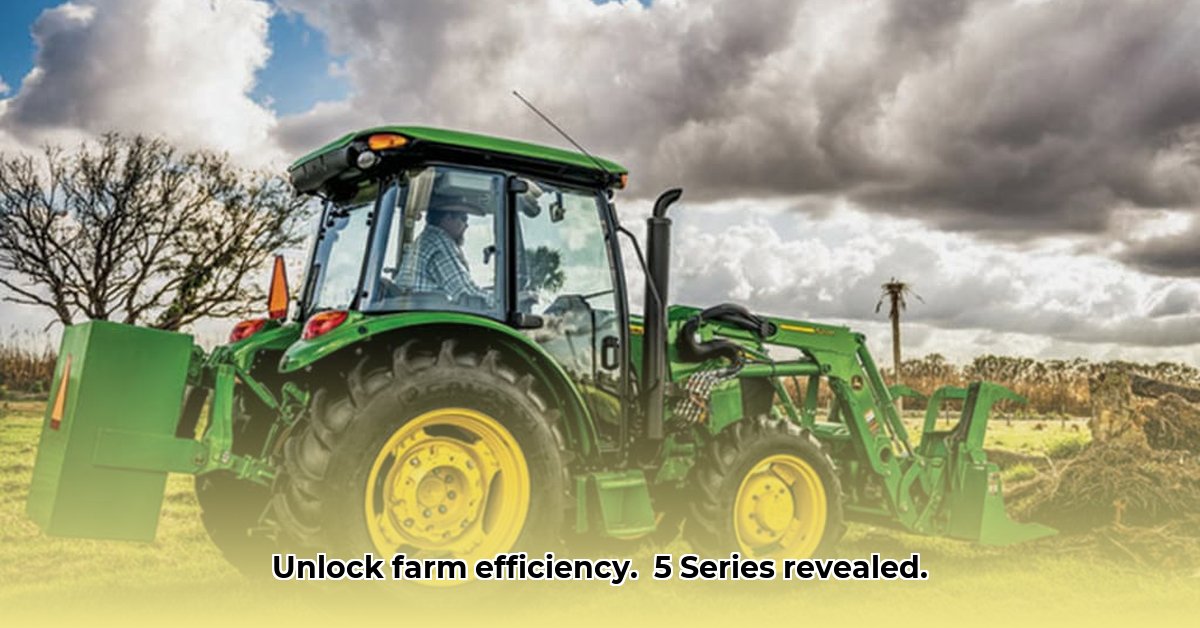
Getting the most from your farm hinges on having the right equipment. For many farmers, that means a tractor that's powerful, versatile, and user-friendly. The John Deere 5 Series tractors aim to deliver precisely that, offering a range of features designed to increase efficiency and streamline your workday. Let's delve into the details. For more information on John Deere manufacturing, check out where they're made.
Power and Performance: Selecting the Right Horsepower
John Deere's 5 Series tractors offer a diverse range of horsepower options, typically from 50 to 130 horsepower (hp). This broad selection allows farmers to choose a tractor perfectly matched to their specific needs. Smaller operations might opt for a lower horsepower model ideal for tasks like vineyard maintenance, while larger farms requiring heavier lifting will benefit from a higher horsepower option. This adaptability is a significant advantage, ensuring farmers invest only in the power they require.
Cab Comfort: Enhancing Operator Well-being
Spending long hours in an uncomfortable seat is counterproductive. The John Deere 5 Series addresses this with multiple cab options: a basic open station, a standard cab with essential features, and a premium cab boasting climate control, advanced suspension, and superior soundproofing. Choosing the right cab depends on budget and anticipated usage. Prioritizing operator comfort is an investment in productivity and overall well-being.
Smart Technology: Data-Driven Decision Making
Modern farming relies heavily on technology, and the 5 Series embraces this trend. Many models integrate systems like JDLink™ (a telematics system for monitoring tractor performance and location) and TractorPlus™ (precision farming software). These systems gather and transmit data on tractor performance, fuel consumption, and more, providing valuable operational insights. Farmers can track fuel efficiency, schedule maintenance proactively, and even receive alerts regarding potential issues. This data-driven approach enhances decision-making, optimizes yields, and reduces downtime. Isn't leveraging technological advantages crucial for modern agricultural success?
Sustainability: A Focus on Environmental Responsibility
Environmental concerns are paramount for many farmers. While precise data on fuel efficiency (liters per hectare) and greenhouse gas emissions (grams of CO2 equivalent per hectare) can vary greatly based on usage and conditions, certain aspects of the 5 Series design contribute to potential environmental benefits. For example, lower horsepower models may not require emissions control systems like diesel exhaust fluid (DEF) and diesel particulate filters (DPF), potentially leading to reduced fuel consumption and maintenance—lowering both operating costs and environmental impact. While detailed sustainability data requires further investigation, the inherent design features indicate a potential for improved environmental performance.
Competitive Analysis: A Balanced Perspective
Direct comparisons between tractor brands are challenging due to varying specifications and features. To gain a complete perspective, research offerings from competitors like Kubota, Mahindra, and Case IH. Consider factors like horsepower ratings, available features, pricing, and any available sustainability data. Each brand emphasizes different aspects; therefore, defining your priorities is crucial. Don't just focus on the initial price; consider long-term maintenance and operational costs. Thorough research, including consultations with other farmers and reviews, is paramount before making a decision.
The Future of Farming: Embracing Innovation
The John Deere 5 Series represents current technology in agricultural machinery, but the industry is constantly evolving. Expect further advancements in automation, the integration of artificial intelligence (AI) in farm practices, and a greater emphasis on precise sustainability metrics. Farmers who embrace these changes will be well-positioned for future success. The next generation of tractors will likely feature even more sophisticated technology for increased efficiency, reduced environmental impact, and optimized cost-benefit ratios. The trend towards precision agriculture will increasingly influence farming practices.
How to Compare John Deere 5 Series Tractor Fuel Efficiency to Competitors
Understanding fuel efficiency is paramount. While manufacturer specifications provide a starting point, real-world performance varies significantly. Several factors, including terrain, operational intensity, and operator techniques, influence fuel consumption. Independent tests may be available, but their conditions might not mirror your specific farming environment. This highlights the importance of collecting data from multiple sources, including farmer testimonials and independent assessments. The "horsepower-hours per gallon" (hp-hr./gal) metric provides a useful benchmark but needs to be interpreted within the context of your specific farming practices. Finally, remember to factor in the total cost of ownership, going beyond fuel consumption to include maintenance and operational expenses.